


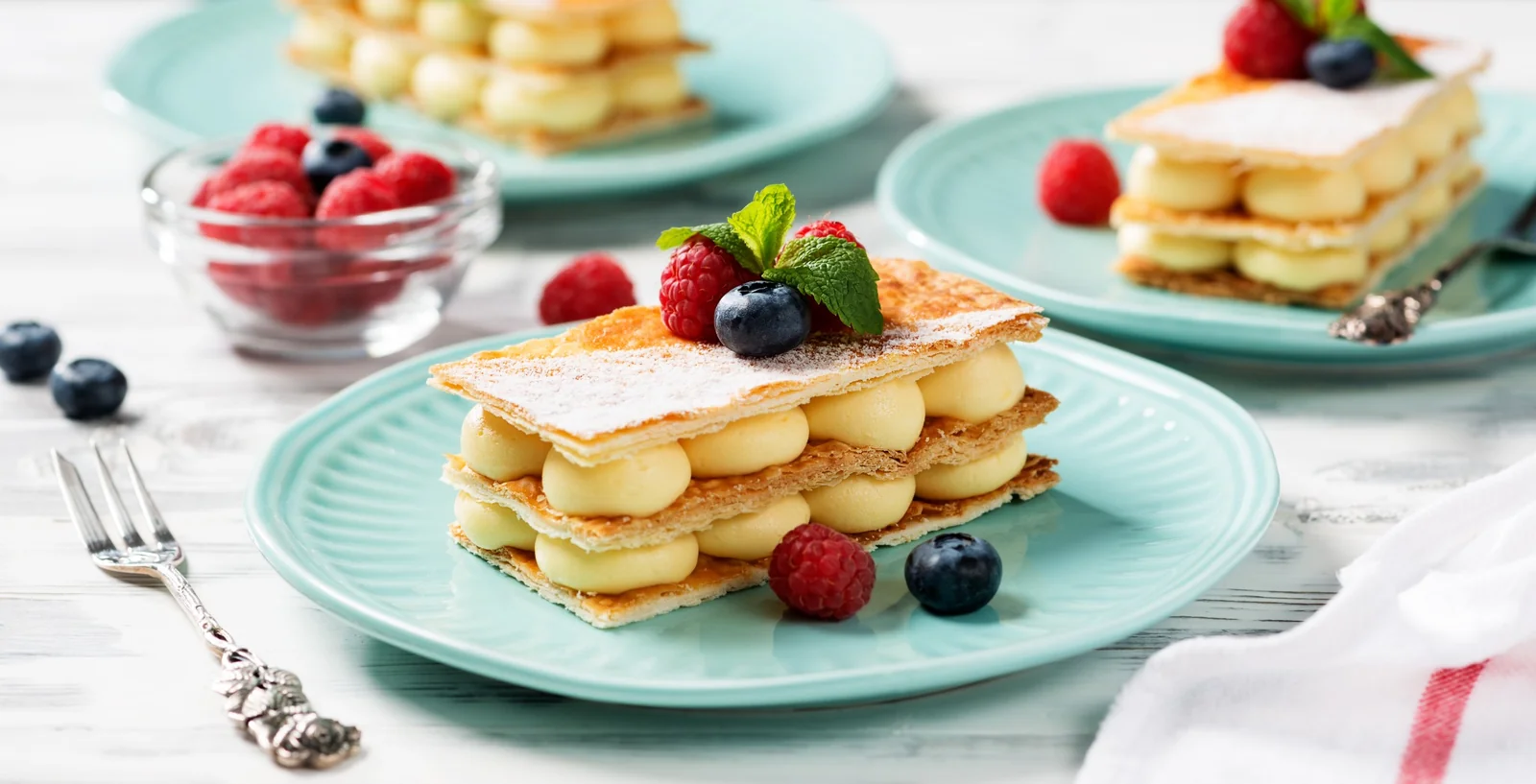
Vanilla occupies a special place in the world of patisserie. An emblematic ingredient, it has been used through the ages, across trends and cultures, without ever losing its nobility.
Behind its apparent softness lies a demanding raw material, the quality of which directly determines the final result in professional pastry-making.
Vanilla, the aromatic pillar of pastry-making :
In pastry-making, vanilla is more than just a flavour. It plays a structuring role in the aromatic balance of recipes. Its complex profile - combining floral, woody, spicy and sometimes chocolaty notes - brings depth and length to the palate of sweet preparations.
Custards, ganaches, mousses, biscuits, ice creams, entremets and pastries: vanilla acts as a flavour enhancer. It enhances the main ingredients without ever masking them, provided it is used with precision and discernment.
Why is Madagascar Bourbon vanilla the preferred choice for pastries?
Bourbon vanilla from Madagascar is widely recognised as the benchmark for patisserie professionals. Its rich aroma, high natural vanillin content and roundness in the mouth make it the ideal choice for gourmet applications.
Above all, pastry chefs are looking for :
- a good brewing capacity, particularly in dairy products.
- a intense but balanced aromas,
- a stability of flavours during cooking,
- a batch consistency,
Bourbon vanilla from Madagascar meets these requirements when it is correctly prepared, refined and controlled according to professional standards.
The importance of choosing the right pastry grade :
Not all vanillas are suitable for the same uses. In pastry-making, the choice of grade is crucial.
- Gourmet Bourbon (Grade A) Soft, full-bodied and visually impeccable, these beans are ideal for creams, ice creams, entremets and top-of-the-range desserts where the vanilla is visible or strongly expressed.
- EU Red (Grade B) Perfectly suited to infusion, it is ideal for preparations requiring an excellent aromatic yield, while optimising material costs.
- Cuts or Red Split Used in certain professional recipes or in intermediate preparations, they offer a good aromatic compromise for specific uses.
By adapting the grade to the application, you can achieve consistent results while keeping production costs under control.
Natural vanilla vs flavours: a strategic choice for craftsmen :
Faced with economic constraints, some professionals are tempted to use flavourings. However, natural vanilla still has a decisive advantage: aromatic complexity.
Unlike synthetic flavours, natural vanilla evolves over time and interacts with the other ingredients. It provides a unique taste signature, recognisable by the discerning consumer, and clearly promotes artisanal and premium products.
At a time when consumers are looking for greater authenticity, natural vanilla is becoming a real differentiator.
A gourmet alliance focused on excellence :
The association between vanilla and patisserie is much more than a marriage of flavours: it's a commitment to quality, precision and expertise. Behind every successful dessert lies a carefully selected raw material, worked with respect and technically mastered.
For craftsmen, pastry houses and premium brands, choosing a vanilla that is suited to their uses, traceable and regular, is an essential lever for enhancing their identity and satisfying increasingly demanding consumers.
For :
👉 Request a vanilla data sheet for your pastry applications
👉 Request a professional sample
👉 Receive a quote tailored to your volumes and uses